Showing posts with label Oil Pastels. Show all posts

Friday, September 9, 2016

Butterflies!

Folded paper in half...taught Symmetry and same...helped them to see things that were symmetrical.
tried to draw both sides the same...the end of the year and we had done SO many directed draw lessons...they were quite good at following directions in directed draw!
They did a great job and drawing and coloring to be symmetrical!
I had taken their pictures and printed in black and white to glue in the middle.


Wednesday, October 14, 2015

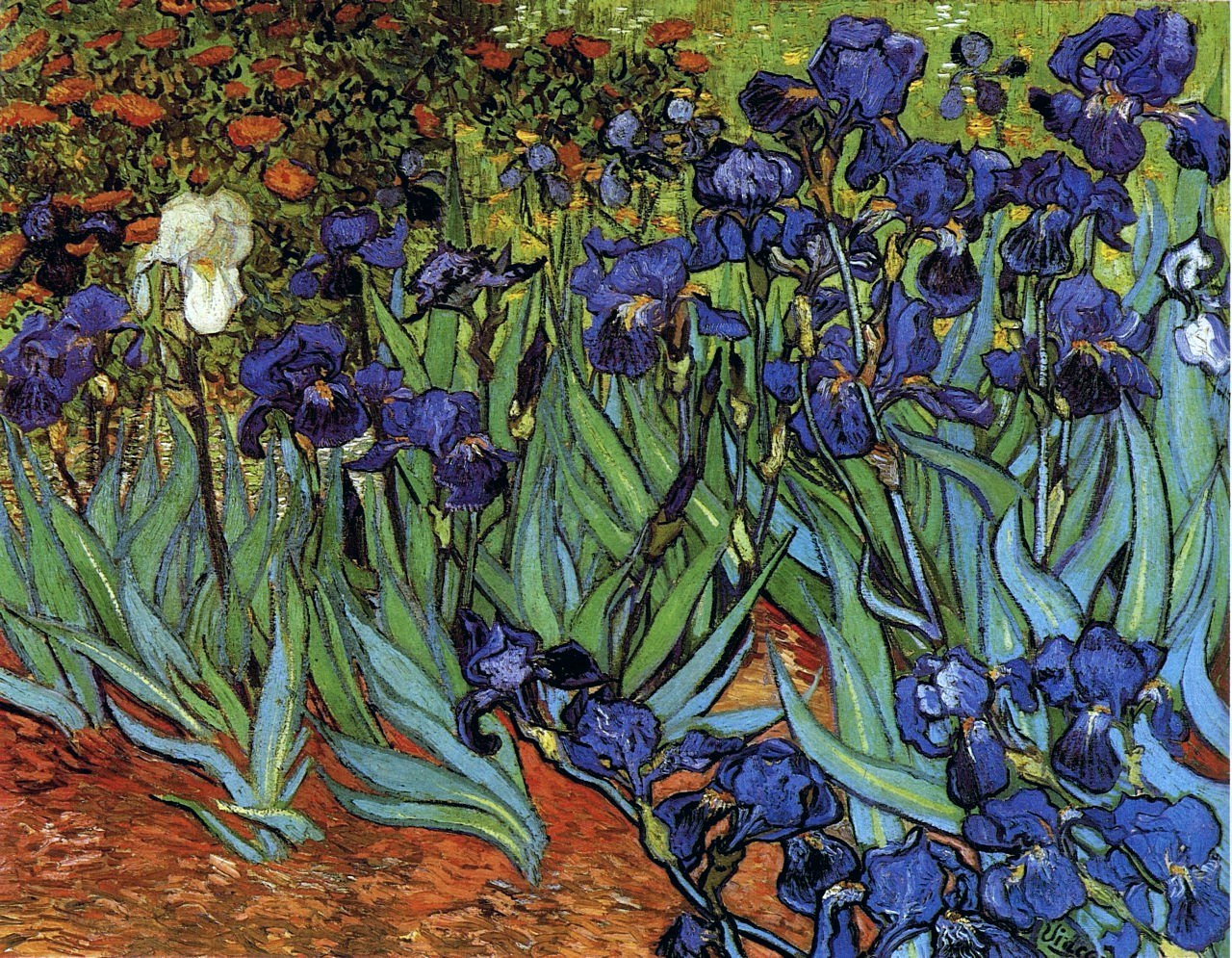
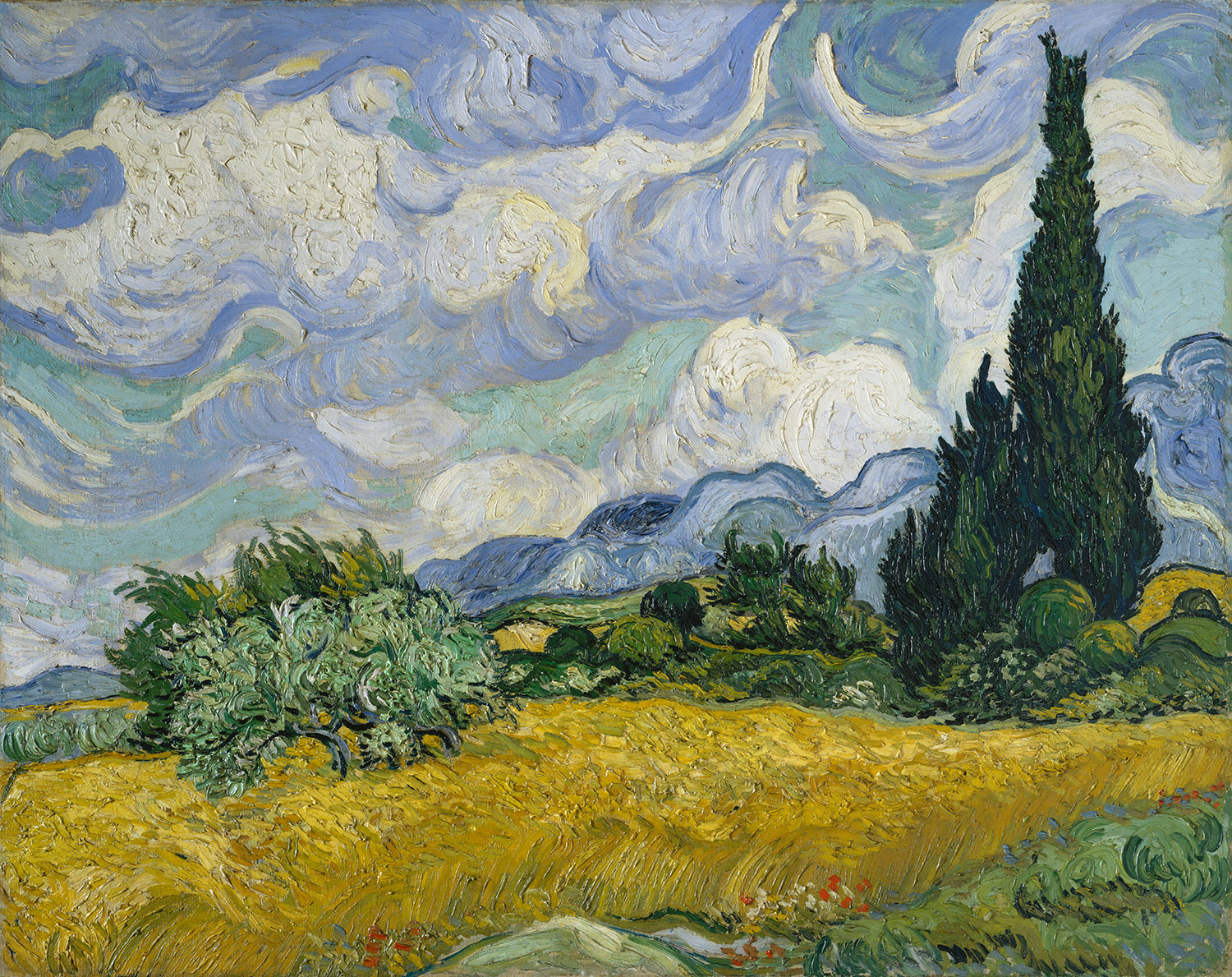
Van Gogh - Pumpkin Patch Starry Night


2nd Grade

Vincent Willem van Gogh (Dutch: [ˈvɪnsɛnt ˈʋɪləm vɑn ˈɣɔx];[note 1] 30 March 1853 – 29 July 1890) was a Post-Impressionistpainter. He was a Dutch artist whose work had a far-reaching influence on 20th-century art. His output includes portraits, self portraits, landscapes and still lifes of cypresses, wheat fields and sunflowers. He drew as a child but did not paint until his late twenties; he completed many of his best-known works during the last two years of his life. In just over a decade, he produced more than 2,100 artworks, including 860 oil paintings and more than 1,300 watercolors, drawings, sketches and prints.
Van Gogh was born to upper middle class parents and spent his early adulthood working for a firm of art dealers. He traveled between The Hague, London and Paris, after which he taught in England at Isleworth and Ramsgate. He was deeply religious as a younger man and aspired to be a pastor. From 1879 he worked as a missionary in a mining region in Belgium, where he began to sketch people from the local community. In 1885 he painted The Potato Eaters, considered his first major work. His palette then consisted mainly of somber earth tones and showed no sign of the vivid coloration that distinguished his later paintings. In March 1886, he moved to Paris and discovered the French Impressionists. Later, he moved to the south of France and was influenced by the strong sunlight he found there. His paintings grew brighter in color, and he developed the unique and highly recognizable style that became fully realized during his stay in Arles in 1888.


Examples from Mrs. Graves class 2015-2016


Wednesday, August 26, 2015

Dragons - First Grade

Chinese Dragons
Directed draw.
My example.

Kyle's example we did before class.

Kyle's class time Dragon.


Dragons

Directed draw around Chinese New Year.  Dragons.  


Examples from Mr. Swanson's 4th Grade Class 2014-2015 


Paul Klee


Paul Klee ~ 
An Abstract artist from Switzerland.  
Born into a musical family - but he chose to be an artist.  His artwork shows his love of color and line, love of music and love of children's artwork.
By the age of seven he was playing the violin, and at age eight he was given a box of sidewalk chalk by his grandmother.

Abstract Art:  Art that does not attempt to represent recognizeable reality (or art that looks like a picture) but seeks to achieve its effect using shapes, forms, colors and textures.

Born 1879 - 1940

A Line is a dot that went for a walk.

Art should be like a holiday: something to give a man the opportunity to see things differently and to change his point of view.


A cat lives in a house filled with toys, but every day she dreams of being free like the bird she watches through the window. Finally, with the bird's help, she is able to escape and dance on the roofs of the city by moonlight. This lovely story unfolds in a series of playful, brilliantly colourful illustrations based on the artist Paul Klee's work. Influenced by the artist's bright palette and use of shapes and line, the book culminates in a dazzling reproduction of Klee's Cat and Bird. Accompanied by information about the artist and this iconic painting, the book invites appreciation of the unfettered joyfulness that makes Klee one of the most universally loved artists of all time.


  Klee worked in many different media—oil paint, watercolor, ink, pastel, etching, and others. He often combined them into one work. He used canvas, burlap, muslin, linen, gauze, cardboard, metal foils, fabric, wallpaper, and newsprint.[62] Klee employed spray paint, knife application, stamping, glazing, and impasto, and mixed media such as oil with watercolor, water color with pen and India ink, and oil with tempera

He often used geometric forms as well as letters, numbers, and arrows, and combined them with figures of animals and people. Some works were completely abstract.

 width=


Examples from Mr. Swanson's 4th Grade Class 2014-2015